Riding an elevator
etiquettePart of Shared spaces patterns
Elevators are small, shared boxes, and getting in, out and between floors becomes slow and awkward when people crowd the door or block each other.
Applies when
- you share an elevator with strangers or colleagues
- the building is busy, such as an office, hotel, hospital or station
- people with prams, wheelchairs, trolleys or luggage also need the lift
Summary
This pattern is for anyone who uses an elevator (or lift) in a shared building. It describes where to stand, how to get on and off, and the small courtesies that keep a crowded lift moving.
| Recommendation | Why? |
|---|---|
| Stand to the side of the doors and let everyone out before you get in. | People leaving can’t get past you, and the doors close on a car that hasn’t emptied yet. |
| Once inside, move to the back and sides. | It leaves room near the door for the next person and for whoever gets off first. |
| If you end up next to the buttons, press floors for others when they ask. | People behind you can’t reach the panel without squeezing past everyone. |
| Hold the door with the “door open” button, not your arm, foot or bag. | The button holds the door reliably, while sensors may not detect a hand or strap, and holding it for long delays everyone on other floors. |
| Take your backpack off and hold bags low in front of you. | A backpack takes up the space of another person and bumps whoever is behind you. |
| Face the door and keep phone calls short and quiet. | Facing the door is the expected default, and nobody in a small space can avoid hearing your call. |
| Give priority to people with wheelchairs, prams, walking aids or heavy loads. | They often have no alternative to the lift, while you may. |
| Take the stairs for one or two floors if you’re able. | It frees the lift for people who need it and is often just as quick. |
| In a fire or when the alarm sounds, never use the lift. Use the stairs. | Lifts can stop, open on the fire floor or fill with smoke, which is why buildings post this warning beside the doors. |
Context
This pattern suits busy shared buildings: offices at nine and five, hotels at checkout, apartment blocks, hospitals and train stations.
It does not suit a private home lift, a goods or service lift with its own operating rules, or an evacuation lift that fire wardens are specifically directing people to use.
There’s a trade-off between holding the door for someone and keeping the lift moving. A few seconds for someone hurrying towards it is kind, but holding it for a friend still down the corridor makes everyone wait. This pattern says hold it briefly for people you can see, then let it go.
Usage
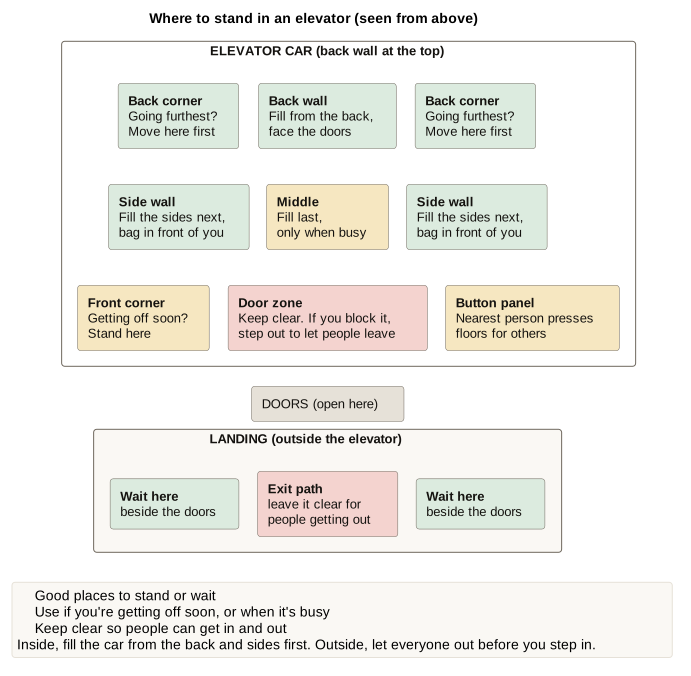
Waiting: press the call button once, for the direction you want to travel. Stand to the side of the doors rather than in front of them, so people can get out in a straight line.
Getting in: let the car empty, then step in and move to the back or into a corner. If you’re getting off soon and it’s crowded, stand near the door instead, and step out briefly at other floors to let people past.
Riding: keep your bag in front of you and conversations quiet. If you meet someone you know, save the longer chat for the lobby, where Leave room in the circle helps others join in.
Getting out: say “excuse me” and move steadily. If you’re blocking the door, step out to let others leave, then step back in.
For moving stairways in the same building, see Standing and walking on escalators.
References
The signs beside the lift and your building’s fire and evacuation instructions are the authority for that building, including whether lifts may ever be used in an emergency.
Credits
AuthorPattern Life team
Published